Saturday, December 31, 2011

Friday, December 30, 2011

Wednesday, December 28, 2011
Inflation Chart
I hate inflation, which is why it is a common post on this blog. This chart shows inflation throughout the last few years. The take away from here is inflation isn't as high as 2008, but still should not be at this level.

Sunday, December 25, 2011
Inception Overrated
Inception was overrated. And here is why. The movie I feel was made to be confusing. It could have been much more comprehensible. I feel it was all a dream. But that is neither here nor there. It had some points where it could be seen as a three and a half star movie, the rating which it was given. But for at least an hour it had the appearance of an action movie. If I wanted to see action I would have seen Die Hard. Just because something makes people talk does not make it intelligent. It can make it popular at the water cooler, but so does Monday Night Football. My mother for one fell asleep during the movie. Overrated I, I think so.
- Posted using BlogPress from my iPad
- Posted using BlogPress from my iPad
Sunday, December 18, 2011
Jonah Hill and Cee Lo Green look alike
Both have Jewish last names as well.
Thursday, December 15, 2011
Wednesday, December 14, 2011
Short Post Quote
Today I would just like to post a quote that I thought up yesterday.
"On my short time on this earth I have learned two indisputiable facts, people are stupid, and so am I.
"On my short time on this earth I have learned two indisputiable facts, people are stupid, and so am I.
Monday, December 12, 2011
Website
Today I would just like to direct you to a excellent tech blog. With explanations and current news.
http://daringfireball.net/
http://daringfireball.net/
Monday, December 5, 2011
 Maybe things aren't as good as we thought.
Tuesday, November 29, 2011
Speech
If I were President I would make a Speech similar to this.
Citizens, this is the greatest country in the world. Yet, our economic system and physical situation is erratic at best. We owe billions of dollars to our competitors and we have no plan to end it. Our deficit has exceeded 15 trillion dollars. If the United States were a citizen we would have gone bankrupt long ago. I know the words entitlements and cuts have been something thrown around lately. We have protestors who have no idea as to why they are protesting. Yes there is a disparity between the upper and middle class and yes it is growing, but where there is capitalism, there is competition and unfairness. There have also been conversations of raising taxes. Taxes will not be raised until we make cuts as Congress will want to spend the new flow of money coming in. Medicare and Medicaid will be cut. I am sorry, I wish we all could just all have all the entitlements we desire, but as is obvious this is not possible. For this I am sorry. We as a country will begin to tighten our belt and get our house in order. You the citizens have had to tighten your figurative belts as of late. So as a symbolic show I will be literally tightening my belt. I will up my belt one notch to remind me of my task and also to show that the job is not finished. Incompetency is not something I am fond of, but this is an inevitability of our elected officials for the last decade or even more. So I again apologize that I have to cut entitlements, but it is we should, no we must do. Thank you for taking the time this evening for listening to your President. As of tomorrow there will be a new dawn for America, which will make this country great again. Thank you and G-d bless America.
Monday, November 21, 2011
Baseball and Pitcher
Verlander win MVP and CY Young award. What a travesty. Cy Young award should be for pitchers and it is. MVP should be for hitters, which it isn't. A person that appears in 21 percent of games does not go through the expiernces of normal baseball. Hands down Ellisbury or Granderson deserverd it, case closed.
Wednesday, November 16, 2011
Monday, November 14, 2011
Tuesday, November 8, 2011
USA Inflation vs. Gold Prices (1999-Present)
When we zoom in we can obviously see a disparity between the two.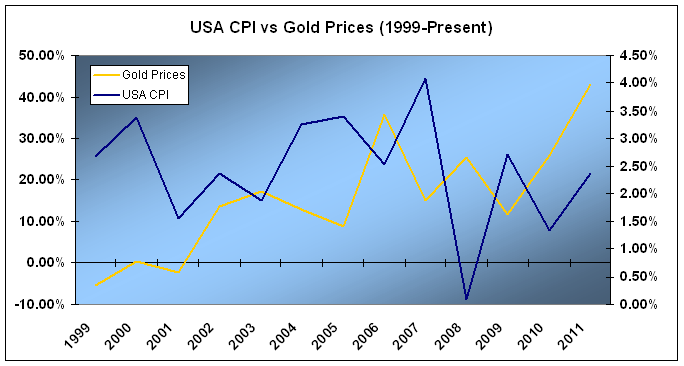
Monday, November 7, 2011
Jeff Bridges looks like Jon Corzine
I believe that Jeff Bridges- of The Big Lebowski among others, looks like Jon Corzine- Former CEO of Goldman Sachs, Former Governor, Former Senator and Former CEO of the now defunct MF Global.
 -Jon Corzine
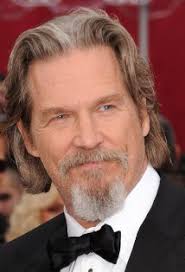 -Jeff Bridges "The Dude"
-Jon CorzineFriday, November 4, 2011
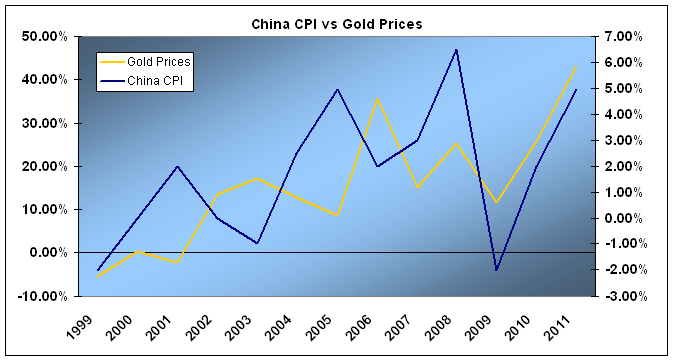
Gold and inflation Series Pt. 1
For the next few days their will be a four part series on Gold and inflation.
Up until recentley gold bascailly followed CPI, U.S. inflation. But, Gold has broken off from the chain and has flown to new heights. While inflation has modestley risen.
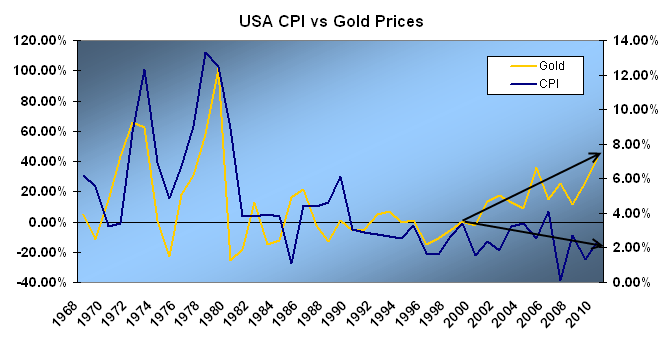
Up until recentley gold bascailly followed CPI, U.S. inflation. But, Gold has broken off from the chain and has flown to new heights. While inflation has modestley risen.
Thursday, November 3, 2011
Canadian currency vs. the Euro
FXE-Green Euro ETF FXC- Blue- Canadian ETF Look at the past few weeks and I think you can see it.
¹
|


Wednesday, November 2, 2011
Tuesday, November 1, 2011
Candidate Rick Perry's new tax plan
I do believe that we are being taxed too much. While the Perry tax plan has many benefits maybe the rich aren't being taxed enough in this instance.
Monday, October 31, 2011
How QE2 sucked
 |
Thursday, October 27, 2011
Obama's student loan plan a joke
A recent article in Atlantic Monthly caught my eye yesterday. It seems that Obama's "great" plan is really a lot of smoke and mirrors. As you will read it will provide the average student with 8 dollars a month. This charade is awful at best. Is this really worth an executive order. I think not.
Obama's Executive Orders
The president seeks to make the situation a little bit easier for some of those graduates. He will create an executive order that has three components.
Those last two orders are really just the president moving up the timeline of existing legislation. Both changes are set to go into effect in 2014, but the president will order that they go into effect as of 2012.
The Impact
Let's consider the impact of each of these orders.
Consolidation
The first would clearly be the most significant, because it is aimed at helping more student loan borrowers. How much would an interest rate reduction of up to 0.5% affect payments?
For the average borrower, the impact would be small. In 2011, Bachelor's degree recipients graduating with debt had an average balance of $27,204, according to an analysis done by finaid.org, based on Department of Education data. That average has ballooned from just $17,646 over the past decade.
Using these values as the high and low bounds of average student debt over the last ten years, the monthly savings for the average student loan borrower would be between $4.50 and $7.75 per month. Clearly, this isn't going to save the economy. While borrowers with bigger balances would save more, this is the average. And even someone with $100,000 in loans would only cut their monthly payments by $28.50.
Payment Limits
As mentioned, the government already has a program for borrowers to reduce their student loan payments to a ceiling of 15% of their income. At this time, just 450,000 borrowers are participating. Clearly, all of those participants would benefit from lowering the max payment to 10%. But how many others would?*
Student loan balances have really only ballooned over the past decade. So this change would affect very few Americans over the age of 32. For the young adults who it may effect, we must remember that educational attainment has some correlation to income. Those with the most debt will have attended business school, medical school, or law school. Most of those people will also have higher incomes, making them ineligible. For a person with the average student debt load, their annual income would need to be lower than $32,000** to qualify. The average income for Bachelor's degree holders aged 25 to 34 is $40,100.
Loan Forgiveness
Of all these parts of Obama's executive order, the loan forgiveness aspect will have the least impact. By moving the timeline from 25 to 20 years, it could be significant in the long run -- but it won't be felt for decades. Remember, 82% of the current student loan debt outstanding was accrued in just the past decade. So it will be at least another 10 years before any of those borrowers have hit the 20-year mark in their student loan payments.
Can an Executive Order Really Do This?
Some opponents of excessive executive power may question whether an executive order can really even accomplish these ends. The president is ordering a policy change for loan consolidation and changing the implementation date for previously passed legislation. Either of these actions could make for a really interesting court challenge, as both appear to stretch the limits of what an executive order was designed to do -- shouldn't Congress order such changes?
In practice, however, the orders will probably go through without challenge. First, it isn't clear that anyone who has standing to bring such a case to court would do so. The first measures may cost some private lenders some interest revenue, but they need to keep a conciliatory relationship with the government. The latter two measures would cost taxpayers. And even if such a challenge was brought, it could take the court a year or two to provide a final verdict. By then, unless a judge grants a temporary injunction, consolidation would already have occurred for most interested borrowers and the legislation's stated implementation date would already be past for the latter two aspects of Obama's effort.
By calling for these measures, President Obama seeks to respond directly to young Americans stressed about their student loans. Indeed, one of the vague objectives of the Occupy Wall Street movement is for student debt forgiveness. But from a practical standpoint, these executive orders won't have much of an impact. To take on the student debt problem more aggressively, the president would need some actual legislation that would shake the fundamental framework of the student loan system.
Obama's Executive Orders
The president seeks to make the situation a little bit easier for some of those graduates. He will create an executive order that has three components.
- He will clear the way for borrowers with direct government loans and government-backed private loans to consolidate their balances. The White House estimates that this will cut the effective interest rate on student loans by up to 0.5%.
- He will limit the amount of student loan payments to 10% of a graduate's income. (Currently, the limit is 15%.)
- He will allow debt still outstanding after 20 years to be forgiven. (Currently, forgiveness occurs after 25 years.)
Those last two orders are really just the president moving up the timeline of existing legislation. Both changes are set to go into effect in 2014, but the president will order that they go into effect as of 2012.
The Impact
Let's consider the impact of each of these orders.
Consolidation
The first would clearly be the most significant, because it is aimed at helping more student loan borrowers. How much would an interest rate reduction of up to 0.5% affect payments?
For the average borrower, the impact would be small. In 2011, Bachelor's degree recipients graduating with debt had an average balance of $27,204, according to an analysis done by finaid.org, based on Department of Education data. That average has ballooned from just $17,646 over the past decade.
Using these values as the high and low bounds of average student debt over the last ten years, the monthly savings for the average student loan borrower would be between $4.50 and $7.75 per month. Clearly, this isn't going to save the economy. While borrowers with bigger balances would save more, this is the average. And even someone with $100,000 in loans would only cut their monthly payments by $28.50.
Payment Limits
As mentioned, the government already has a program for borrowers to reduce their student loan payments to a ceiling of 15% of their income. At this time, just 450,000 borrowers are participating. Clearly, all of those participants would benefit from lowering the max payment to 10%. But how many others would?*
Student loan balances have really only ballooned over the past decade. So this change would affect very few Americans over the age of 32. For the young adults who it may effect, we must remember that educational attainment has some correlation to income. Those with the most debt will have attended business school, medical school, or law school. Most of those people will also have higher incomes, making them ineligible. For a person with the average student debt load, their annual income would need to be lower than $32,000** to qualify. The average income for Bachelor's degree holders aged 25 to 34 is $40,100.
Loan Forgiveness
Of all these parts of Obama's executive order, the loan forgiveness aspect will have the least impact. By moving the timeline from 25 to 20 years, it could be significant in the long run -- but it won't be felt for decades. Remember, 82% of the current student loan debt outstanding was accrued in just the past decade. So it will be at least another 10 years before any of those borrowers have hit the 20-year mark in their student loan payments.
Can an Executive Order Really Do This?
Some opponents of excessive executive power may question whether an executive order can really even accomplish these ends. The president is ordering a policy change for loan consolidation and changing the implementation date for previously passed legislation. Either of these actions could make for a really interesting court challenge, as both appear to stretch the limits of what an executive order was designed to do -- shouldn't Congress order such changes?
In practice, however, the orders will probably go through without challenge. First, it isn't clear that anyone who has standing to bring such a case to court would do so. The first measures may cost some private lenders some interest revenue, but they need to keep a conciliatory relationship with the government. The latter two measures would cost taxpayers. And even if such a challenge was brought, it could take the court a year or two to provide a final verdict. By then, unless a judge grants a temporary injunction, consolidation would already have occurred for most interested borrowers and the legislation's stated implementation date would already be past for the latter two aspects of Obama's effort.
By calling for these measures, President Obama seeks to respond directly to young Americans stressed about their student loans. Indeed, one of the vague objectives of the Occupy Wall Street movement is for student debt forgiveness. But from a practical standpoint, these executive orders won't have much of an impact. To take on the student debt problem more aggressively, the president would need some actual legislation that would shake the fundamental framework of the student loan system.
Wednesday, October 26, 2011
Review Bomerang by Michael Lewis
I have recentley finished reading Bommerang and I loved it. Michael Lewis is my favorite author and he always meets expectations and exceeds them for his books.
Here is a review that was published in the New York Times Book Review
This is why, Mr. Lewis writes, “European leaders have done nothing but delay the inevitable reckoning, by scrambling every few months to find cash to plug the ever growing holes in Greece, Ireland and Portugal, and praying that bigger and more alarming holes in Spain, Italy and even France do not reveal themselves.”
How did this situation develop? In “Boomerang” Mr. Lewis captures the utter folly and madness that spread across both sides of the Atlantic during the last decade, as individuals, institutions and entire nations mindlessly embraced instant gratification over long-term planning, the too good to be true over common sense.
Greece, Mr. Lewis writes, ran up astonishing debts — from high-paying government jobs and generous pensions, as well as waste, bribery and theft — that came to “about $1.2 trillion, or more than a quarter-million dollars for every working Greek.” In just the last 12 years, he says, “the wage bill of the Greek public sector has doubled, in real terms” with the average government job now paying almost three times the average private sector job. Those who work in jobs classified as “arduous” can retire and start collecting pensions, he adds, “as early as 55 for men and 50 for women”; more than 600 Greek professions have somehow managed “to get themselves classified as arduous: hairdressers, radio announcers, waiters, musicians, and on and on and on.”
In the prelude to the 2008 economic meltdown, Mr. Lewis reports, British investors, lured by the prospect of 14 percent annual returns, “forked over $30 billion” to dubious Icelandic banks (“$28 billion from companies and individuals and the rest from pension funds, hospitals, universities and other public institutions” including Oxford University which “alone lost $50 million”). And property-related bank losses in Ireland, according to one Irish economist cited by Mr. Lewis, now come to roughly 106 billion euros; and since, Mr. Lewis says, a “handful of Irish politicians and bankers had decided to guarantee all the debts of the biggest Irish banks,” those losses “alone would absorb every penny of Irish taxes for the next four years.”
At times Mr. Lewis can sound a lot like Evelyn Waugh: shrewd, observant and savagely judgmental, dispensing crude generalizations about other countries, even as he pokes fun at himself as a disaster tourist. He asserts that Icelanders “have a feral streak in them, like a horse that’s just pretending to be broken” and suggests that Germans are “obsessed with cleanliness and order yet harbor a secret fascination with filth and chaos” which is bound to result in “some kind of trouble.” He is perhaps toughest on his fellow Americans, concluding that the 2008 economic meltdown stemmed in large part from “people taking what they can, just because they can, without regard to the larger social consequences.”
“It’s not just a coincidence that the debts of cities and states spun out of control at the same time as the debts of individual Americans,” he says, noting that states like California with ballooning pension obligations and employment costs face deficit problems not unlike those faced by Greece.
“Alone in a dark room with a pile of money, Americans knew exactly what they wanted to do, from the top of the society to the bottom,” he goes on. “They’d been conditioned to grab as much as they could without thinking about the long-term consequences. Afterward, the people on Wall Street would privately bemoan the low morals of the American people who walked away from their subprime loans, and the American people would express outrage at the Wall Street people who paid themselves a fortune to design the bad loans.”
In “The Big Short” Mr. Lewis focused around a handful of investors who were aghast at how the dangers of the subprime mortgage market were being ignored by bank executives and government regulators, and who used their prescience to make a fortune betting against the stability of the system. One of them — left “on the cutting-room floor” of that earlier book — was a hedge-fund manager named Kyle Bass, who by the end of 2008 had already moved on to a “new all-consuming interest, governments.”
Mr. Bass reasoned that the financial crisis wasn’t over, that, in Mr. Lewis’s words, “the bad loans made by highly paid financiers working in the private sector were being eaten by national treasuries and central banks everywhere,” which meant that entire countries could collapse. Months later, when entire countries did indeed start to go bust, Mr. Lewis asked himself, “How did a hedge fund manager in Dallas even think to imagine this strange world?”
In the course of “Boomerang” Mr. Lewis introduces us to other, “disturbingly prescient” people, like Morgan Kelly, a professor of economics at University College Dublin, who began noticing in 2006 that something seemed seriously out of whack with the Irish housing market. He also foresaw the collapse of Irish banks, which had lent staggering amounts of money to property developers during the Irish real estate bubble.
Among the other intriguing individuals in this volume there’s Stefan Alfsson, an Icelandic fisherman who in 2005 quit fishing and joined the stream of young people becoming bankers, setting himself up as “an adviser to companies on currency risk hedging” — without a day of training. And there are some canny Greek monks who built a vast real estate empire that set off a scandal that Mr. Lewis says helped bring down the government of Prime Minister Kostas Karamanlis in October 2009. When a new government took over, it “found so much less money in the government’s coffers than it had expected that it decided there was no choice but to come clean”; those revelations panicked investors, and the new higher interest rates the country was forced to pay, Mr. Lewis says, “left the country — which needed to borrow vast sums to fund its operations — more or less bankrupt.”
Mr. Lewis’s ability to find people who can see what is obvious to others only in retrospect or who somehow embody something larger going on in the financial world is uncanny. And in this book he weaves their stories into a sharp-edged narrative that leaves readers with a visceral understanding of the fiscal recklessness that lies behind today’s headlines about Europe’s growing debt problems and the risk of contagion they now pose to the world.
Here is a review that was published in the New York Times Book Review
Touring the Ruins of the Old Economy
By MICHIKO KAKUTANI
Published: September 26, 2011
Michael Lewis possesses the rare storyteller’s ability to make virtually any subject both lucid and compelling. In his new book, “Boomerang,” he actually makes topics like European sovereign debt, the International Monetary Fund and the European Central Bank not only comprehensible but also fascinating — even, or especially, to readers who rarely open the business pages or watch CNBC. The book could not be more timely given the worries about Europe’s deepening debt crisis and the recent warning issued by Christine Lagarde, managing director of the I.M.F, that “the current economic situation is entering a dangerous phase.” Combining his easy familiarity with finance and the talents of a travel writer, Mr. Lewis sets off in these pages to give the reader a guided tour through some of the disparate places hard hit by the fiscal tsunami of 2008, like Greece, Iceland and Ireland, tracing how very different people for very different reasons gorged on the cheap credit available in the prelude to that disaster. The book — based on articles Mr. Lewis wrote for Vanity Fair magazine — is a companion piece of sorts to “The Big Short: Inside the Doomsday Machine,” his bestselling 2010 book about the fiscal crisis. Like that earlier book its focus is narrow. It doesn’t aspire to provide a broad overview of the debt crisis but instead hands the reader a small but sparkling prism by which to view the problem, this time from a global perspective.
Mr. Lewis explains why the world is so worried that Greece could default: “If Greece walks away from $400 billion in debt, then the European banks that lent the money will go down, and other countries now flirting with bankruptcy” might easily follow, destabilizing regional and world economies further. He also explains why taxpayers in Germany — the euro zone’s largest economy, with resources critical to a rescue plan — are reluctant to keep bailing out other countries they regard as profligate, indolent and irresponsible. This is why, Mr. Lewis writes, “European leaders have done nothing but delay the inevitable reckoning, by scrambling every few months to find cash to plug the ever growing holes in Greece, Ireland and Portugal, and praying that bigger and more alarming holes in Spain, Italy and even France do not reveal themselves.”
How did this situation develop? In “Boomerang” Mr. Lewis captures the utter folly and madness that spread across both sides of the Atlantic during the last decade, as individuals, institutions and entire nations mindlessly embraced instant gratification over long-term planning, the too good to be true over common sense.
Greece, Mr. Lewis writes, ran up astonishing debts — from high-paying government jobs and generous pensions, as well as waste, bribery and theft — that came to “about $1.2 trillion, or more than a quarter-million dollars for every working Greek.” In just the last 12 years, he says, “the wage bill of the Greek public sector has doubled, in real terms” with the average government job now paying almost three times the average private sector job. Those who work in jobs classified as “arduous” can retire and start collecting pensions, he adds, “as early as 55 for men and 50 for women”; more than 600 Greek professions have somehow managed “to get themselves classified as arduous: hairdressers, radio announcers, waiters, musicians, and on and on and on.”
In the prelude to the 2008 economic meltdown, Mr. Lewis reports, British investors, lured by the prospect of 14 percent annual returns, “forked over $30 billion” to dubious Icelandic banks (“$28 billion from companies and individuals and the rest from pension funds, hospitals, universities and other public institutions” including Oxford University which “alone lost $50 million”). And property-related bank losses in Ireland, according to one Irish economist cited by Mr. Lewis, now come to roughly 106 billion euros; and since, Mr. Lewis says, a “handful of Irish politicians and bankers had decided to guarantee all the debts of the biggest Irish banks,” those losses “alone would absorb every penny of Irish taxes for the next four years.”
At times Mr. Lewis can sound a lot like Evelyn Waugh: shrewd, observant and savagely judgmental, dispensing crude generalizations about other countries, even as he pokes fun at himself as a disaster tourist. He asserts that Icelanders “have a feral streak in them, like a horse that’s just pretending to be broken” and suggests that Germans are “obsessed with cleanliness and order yet harbor a secret fascination with filth and chaos” which is bound to result in “some kind of trouble.” He is perhaps toughest on his fellow Americans, concluding that the 2008 economic meltdown stemmed in large part from “people taking what they can, just because they can, without regard to the larger social consequences.”
“It’s not just a coincidence that the debts of cities and states spun out of control at the same time as the debts of individual Americans,” he says, noting that states like California with ballooning pension obligations and employment costs face deficit problems not unlike those faced by Greece.
“Alone in a dark room with a pile of money, Americans knew exactly what they wanted to do, from the top of the society to the bottom,” he goes on. “They’d been conditioned to grab as much as they could without thinking about the long-term consequences. Afterward, the people on Wall Street would privately bemoan the low morals of the American people who walked away from their subprime loans, and the American people would express outrage at the Wall Street people who paid themselves a fortune to design the bad loans.”
In “The Big Short” Mr. Lewis focused around a handful of investors who were aghast at how the dangers of the subprime mortgage market were being ignored by bank executives and government regulators, and who used their prescience to make a fortune betting against the stability of the system. One of them — left “on the cutting-room floor” of that earlier book — was a hedge-fund manager named Kyle Bass, who by the end of 2008 had already moved on to a “new all-consuming interest, governments.”
Mr. Bass reasoned that the financial crisis wasn’t over, that, in Mr. Lewis’s words, “the bad loans made by highly paid financiers working in the private sector were being eaten by national treasuries and central banks everywhere,” which meant that entire countries could collapse. Months later, when entire countries did indeed start to go bust, Mr. Lewis asked himself, “How did a hedge fund manager in Dallas even think to imagine this strange world?”
In the course of “Boomerang” Mr. Lewis introduces us to other, “disturbingly prescient” people, like Morgan Kelly, a professor of economics at University College Dublin, who began noticing in 2006 that something seemed seriously out of whack with the Irish housing market. He also foresaw the collapse of Irish banks, which had lent staggering amounts of money to property developers during the Irish real estate bubble.
Among the other intriguing individuals in this volume there’s Stefan Alfsson, an Icelandic fisherman who in 2005 quit fishing and joined the stream of young people becoming bankers, setting himself up as “an adviser to companies on currency risk hedging” — without a day of training. And there are some canny Greek monks who built a vast real estate empire that set off a scandal that Mr. Lewis says helped bring down the government of Prime Minister Kostas Karamanlis in October 2009. When a new government took over, it “found so much less money in the government’s coffers than it had expected that it decided there was no choice but to come clean”; those revelations panicked investors, and the new higher interest rates the country was forced to pay, Mr. Lewis says, “left the country — which needed to borrow vast sums to fund its operations — more or less bankrupt.”
Mr. Lewis’s ability to find people who can see what is obvious to others only in retrospect or who somehow embody something larger going on in the financial world is uncanny. And in this book he weaves their stories into a sharp-edged narrative that leaves readers with a visceral understanding of the fiscal recklessness that lies behind today’s headlines about Europe’s growing debt problems and the risk of contagion they now pose to the world.
Tuesday, October 25, 2011
NCAA demanding better academics from colleges
This is a story that really did not recieve large headlines, but I think is very important. College is for academics, as very few college players become pros. As such certain expecatations should be met.
Increase in academic cutline approved
University presidents and athletic administrators promised swift and serious action after their two-day NCAA retreat.
On Thursday, they delivered their first hammer.
Following up on the retreat's mandate to toughen academic standards, the NCAA Board of Directors voted to ban Division I teams with a four-year academic progress rate (APR) below 930 from participating in the postseason, including all NCAA tournaments and football bowl games.It's a significant change from the APR structure now in place. Currently, teams with a four-year APR of 925 or below face penalties like loss of scholarships. Only if a team falls below a 900 and is therefore considered a chronic under-performer will it face "historical penalties" including postseason bans.
Now the NCAA will do away with the 900 cutoff, forcing all teams to raise their academic standards or sit on the sidelines in the postseason. Under the new standards, 12 teams would not have qualified for this year's NCAA tournament, including Ohio State and Syracuse.
"A 930 equates to a 50 percent graduation rate and that is the stake in the ground that the presidents wish to put in as an overall goal for every team in Division I," said Dr. Walt Harrison, president of the University of Hartford who serves as the chair of the Division I committee on academic performance. "It's a clear marker. We believe a 50 percent graduation rate is a reasonable goal for all teams."
The final kinks still need to be worked out, but NCAA president Mark Emmert said he expects a formalized plan to be in place by October. Between now and then Harrison and his committee will look at the particulars, including a timetable for implementing the new structure. Because it is a considerable leap, Harrison said there likely will be a three- to five-year phase-in period, allowing schools to "ratchet up" their academics.
Also under discussion is just when the new numbers would be released. Currently, the NCAA releases its annual APR report in May -- a month after the NCAA tournament ends.
Connecticut, with an APR of 930 in May 2010, was eligible to compete and win a national championship. But as of May 2011, the Huskies' APR dropped to 893. If the new mandate was in place, UConn would not be able to defend its title.
But Harrison said that the different academic calendars -- some schools use quarters while others go by semesters -- would make it difficult to have more than one report released.
"As things currently stand, (the spring scores) would determine the next year's postseason eligibility," Harrison said.One thing that does seem likely to change is the appeal process.
As in there won't be one.
Currently, teams that fall below a 900 can receive a waiver rather than postseason ban in extenuating circumstances -- if, for example, the school has shown marked improvement or the president has shown active involvement in improving his struggling team's academic performance.
"I don't think there will be too much leverage there," Harrison said. "If there is any appeal, I think it will be pretty tightly defined and there might not be any."
U.S. Secretary of Education Arne Duncan had previously called for the NCAA to ban basketball teams with graduation rates below 40 percent from competing in the NCAA tournament. He issued a statement approving of the changes.
"I applaud the NCAA's decision and encourage them to proceed with due speed," Duncan said. "When we joined this conversation two years ago, many experts were skeptical that the NCAA would ever move to deal with the the problem of low graduation rates among a small minority of tournament teams. But they were wrong. College presidents have acted courageously and are leading the way."
NCAA statistics show athletes graduate at a higher rate that non-athletes and academic performance has steadily improved among all sports The most recent numbers, released in May, showed the overall average score for athletes jumped three points to 970. Two of the lower scoring sports -- baseball (959) and men's basketball (945) -- had a five-point jump over the previous year. Another low-scoring sport, football (946), had a two-point jump.
The rule change will likely go down like a dose of castor oil in college hoops circles. Since it was implemented, the APR long has been a sticking point among college basketball coaches who argue it punishes teams unfairly when players leave early for the NBA.
Two years ago, Syracuse lost two scholarships after Eric Devendorf, Jonny Flynn and Paul Harris opted to leave for the NBA without completing their spring coursework.
"It's flawed," Jim Boeheim said at the time about the APR system. "There is absolutely nothing a coach can do if a kid wants to leave and train for the NBA. If he was leaving and walking the streets, I'd understand. When those kids left, they were eligible. They opted not to finish."
But academic administrators and NCAA officials don't want to hear it. They counter that the APR allows for a student to leave early provided he or she leaves in good academic standing.
And more, they believe that the APR goes to the core of what the NCAA is about.
"This is about making sure student-athletes are students," Emmert said. "There is an expectation that they behave accordingly."
The list of penalized teams has skewed disproportionately toward historically black colleges and universities.
This year, the NCAA graded 340 schools. Twenty-four, or about 7 percent, were HBCUs. Yet of the 58 harshest penalties handed out, half went to teams in the two conferences, the Southwestern Athletic and the Mid-Eastern Athletic, comprised entirely of HBCUs. Four teams in those leagues were banned from NCAA tourneys because of their poor academic performance, and football teams at Southern and Jackson State were even banned from playing in the SWAC title game.
If the new rules were in place last year, Alcorn State would have been the only school in the SWAC eligible for the postseason.
Now, everybody is expected to hit an even higher mark to remain eligible for postseason tourneys.
"From a SWAC standpoint, we have to look at what we're doing and definitely get our house in order. But I think our chancellors are working hard to get that done," commissioner Duer Sharp said. "The NCAA realizes not everyone has the same resources and they've been receptive to our challenges."
Some coaches think it's the right move, though.
"I think it's everybody's responsibility to go to school and get an education," Alabama football coach Nick Saban said. "That's part of our program here. I don't really see it being a big issue that players are held accountable relative to what their responsibility is to get an education."
In other action Thursday, the board:
• Agreed to do away with the single-year APR scores and will only use the four-year rolling average to determine postseason eligibility.
• Agreed to continue providing funding for low-resource schools to help the academic performance of athletes and look at new ways to help those schools.
• Decided to take another look at improving the standards for incoming freshmen and junior college transfers in October.
• Agreed to consider including family members among the definition of third-party influences, a definition that also includes agents.
• Decided not to permit conference or school television networks to broadcast any high school programming, a definition Emmert said will extend beyond athletic contests.
Copyright 2011 by The Associated Press
Increase in academic cutline approved
University presidents and athletic administrators promised swift and serious action after their two-day NCAA retreat.
On Thursday, they delivered their first hammer.
Following up on the retreat's mandate to toughen academic standards, the NCAA Board of Directors voted to ban Division I teams with a four-year academic progress rate (APR) below 930 from participating in the postseason, including all NCAA tournaments and football bowl games.It's a significant change from the APR structure now in place. Currently, teams with a four-year APR of 925 or below face penalties like loss of scholarships. Only if a team falls below a 900 and is therefore considered a chronic under-performer will it face "historical penalties" including postseason bans.
Now the NCAA will do away with the 900 cutoff, forcing all teams to raise their academic standards or sit on the sidelines in the postseason. Under the new standards, 12 teams would not have qualified for this year's NCAA tournament, including Ohio State and Syracuse.
"A 930 equates to a 50 percent graduation rate and that is the stake in the ground that the presidents wish to put in as an overall goal for every team in Division I," said Dr. Walt Harrison, president of the University of Hartford who serves as the chair of the Division I committee on academic performance. "It's a clear marker. We believe a 50 percent graduation rate is a reasonable goal for all teams."
The final kinks still need to be worked out, but NCAA president Mark Emmert said he expects a formalized plan to be in place by October. Between now and then Harrison and his committee will look at the particulars, including a timetable for implementing the new structure. Because it is a considerable leap, Harrison said there likely will be a three- to five-year phase-in period, allowing schools to "ratchet up" their academics.
Also under discussion is just when the new numbers would be released. Currently, the NCAA releases its annual APR report in May -- a month after the NCAA tournament ends.
Connecticut, with an APR of 930 in May 2010, was eligible to compete and win a national championship. But as of May 2011, the Huskies' APR dropped to 893. If the new mandate was in place, UConn would not be able to defend its title.
But Harrison said that the different academic calendars -- some schools use quarters while others go by semesters -- would make it difficult to have more than one report released.
"As things currently stand, (the spring scores) would determine the next year's postseason eligibility," Harrison said.One thing that does seem likely to change is the appeal process.
As in there won't be one.
Currently, teams that fall below a 900 can receive a waiver rather than postseason ban in extenuating circumstances -- if, for example, the school has shown marked improvement or the president has shown active involvement in improving his struggling team's academic performance.
"I don't think there will be too much leverage there," Harrison said. "If there is any appeal, I think it will be pretty tightly defined and there might not be any."
U.S. Secretary of Education Arne Duncan had previously called for the NCAA to ban basketball teams with graduation rates below 40 percent from competing in the NCAA tournament. He issued a statement approving of the changes.
"I applaud the NCAA's decision and encourage them to proceed with due speed," Duncan said. "When we joined this conversation two years ago, many experts were skeptical that the NCAA would ever move to deal with the the problem of low graduation rates among a small minority of tournament teams. But they were wrong. College presidents have acted courageously and are leading the way."
NCAA statistics show athletes graduate at a higher rate that non-athletes and academic performance has steadily improved among all sports The most recent numbers, released in May, showed the overall average score for athletes jumped three points to 970. Two of the lower scoring sports -- baseball (959) and men's basketball (945) -- had a five-point jump over the previous year. Another low-scoring sport, football (946), had a two-point jump.
The rule change will likely go down like a dose of castor oil in college hoops circles. Since it was implemented, the APR long has been a sticking point among college basketball coaches who argue it punishes teams unfairly when players leave early for the NBA.
Two years ago, Syracuse lost two scholarships after Eric Devendorf, Jonny Flynn and Paul Harris opted to leave for the NBA without completing their spring coursework.
"It's flawed," Jim Boeheim said at the time about the APR system. "There is absolutely nothing a coach can do if a kid wants to leave and train for the NBA. If he was leaving and walking the streets, I'd understand. When those kids left, they were eligible. They opted not to finish."
But academic administrators and NCAA officials don't want to hear it. They counter that the APR allows for a student to leave early provided he or she leaves in good academic standing.
And more, they believe that the APR goes to the core of what the NCAA is about.
"This is about making sure student-athletes are students," Emmert said. "There is an expectation that they behave accordingly."
The list of penalized teams has skewed disproportionately toward historically black colleges and universities.
This year, the NCAA graded 340 schools. Twenty-four, or about 7 percent, were HBCUs. Yet of the 58 harshest penalties handed out, half went to teams in the two conferences, the Southwestern Athletic and the Mid-Eastern Athletic, comprised entirely of HBCUs. Four teams in those leagues were banned from NCAA tourneys because of their poor academic performance, and football teams at Southern and Jackson State were even banned from playing in the SWAC title game.
If the new rules were in place last year, Alcorn State would have been the only school in the SWAC eligible for the postseason.
Now, everybody is expected to hit an even higher mark to remain eligible for postseason tourneys.
"From a SWAC standpoint, we have to look at what we're doing and definitely get our house in order. But I think our chancellors are working hard to get that done," commissioner Duer Sharp said. "The NCAA realizes not everyone has the same resources and they've been receptive to our challenges."
Some coaches think it's the right move, though.
"I think it's everybody's responsibility to go to school and get an education," Alabama football coach Nick Saban said. "That's part of our program here. I don't really see it being a big issue that players are held accountable relative to what their responsibility is to get an education."
In other action Thursday, the board:
• Agreed to do away with the single-year APR scores and will only use the four-year rolling average to determine postseason eligibility.
• Agreed to continue providing funding for low-resource schools to help the academic performance of athletes and look at new ways to help those schools.
• Decided to take another look at improving the standards for incoming freshmen and junior college transfers in October.
• Agreed to consider including family members among the definition of third-party influences, a definition that also includes agents.
• Decided not to permit conference or school television networks to broadcast any high school programming, a definition Emmert said will extend beyond athletic contests.
Copyright 2011 by The Associated Press
Sunday, October 23, 2011
A letter from Jane Fonda to me
Dear Jake,
My name is Jane Fonda, and I am pure evil, emphasis on the evil. I committed one of the most heinous crimes in United States’ history, on the level with Benedict Arnold. I was a famous celebrity 30 years ago who thought that committing treason was “cool” or “hip”. In July, of 1972 I was in Hanoi, North Vietnam. Being the ignoramus that I am I sat down on anti-aircraft artillery owned by the North Vietnamese, enemies of the United States of America. I then made 10, yes 10 radio broadcasts saying that the Prisoners of War (POWs) in North Vietnam were “war criminals” To this day I still defend what I said. I called the POWs liars, and hypocrites. I said they had not been starved or tortured basically calling American Heroes, liars to the world at large. I was a rich, spoiled brat who never even finished college. Yet, I was acting as if I was a well-educated academic. I was born into Hollywood royalty and therefore entitled to the highest of privileges. Was I arrested for what I said? No. Was I a social pariah? No. Did I learn my lesson? No. On a separate occasion in 2009 I protested the Toronto Film Festival presentation of ten films pertaining to Tel Aviv, Israel. I believed that these films were part of the “Israeli Propaganda machine”. Not only did I propaganda for the North Vietnamese, but also for Gaza. Have I learned anything from these ordeals? No, and why would I? I only married Billionaire Ted Turner and made over 100 million dollars in my pathetic lifetime. I have taken for granted the privileges that being an American citizen entails. What will I do next? Defend “President” Ahmadinejad of Iran. Who knows? What I do know is that I may have apologized for my actions at times that have benefited me financially, before the release of my book and one of my movies, but I do not sincerely feel it. I look back on these occasions and think, how did I go from being the girl on aerobics videos to this. Really makes you think.
With regards,
Jane Fonda
Dictated but not read
Wednesday, October 19, 2011

Monday, October 17, 2011
Brian Wilson and Zach Galifianakis
If you have ever seen them talk they both sound similar and have similar manerisms.
Friday, October 14, 2011
Average IQ of voter by state and presidential candidate 2008 election
I am a Republican and have a dcent IQ. So maybe take this with a grain of salt. Some Northeastern states have a smaller, wealthier population, so this certaintly contributed to this study.
State | Avg. IQ | 2004 | |
| 1 | Connecticut | 113 | Kerry |
| 2 | Massachusetts | 111 | Kerry |
| 3 | New Jersey | 111 | Kerry |
| 4 | New York | 109 | Kerry |
| 5 | Rhode Island | 107 | Kerry |
| 6 | Hawaii | 106 | Kerry |
| 7 | Maryland | 105 | Kerry |
| 8 | New Hampshire | 105 | Kerry |
| 9 | Illinois | 104 | Kerry |
| 10 | Delaware | 103 | Kerry |
| 11 | Minnesota | 102 | Kerry |
| 12 | Vermont | 102 | Kerry |
| 13 | Washington | 102 | Kerry |
| 14 | California | 101 | Kerry |
| 15 | Pennsylvania | 101 | Kerry |
| 16 | Maine | 100 | Kerry |
| 17 | Virginia | 100 | Bush |
| 18 | Wisconsin | 100 | Kerry |
| 19 | Colorado | 99 | Bush |
| 20 | Iowa | 99 | Bush |
| 21 | Michigan | 99 | Kerry |
| 22 | Nevada | 99 | Bush |
| 23 | Ohio | 99 | Bush |
| 24 | Oregon | 99 | Kerry |
| 25 | Alaska | 98 | Bush |
| 26 | Florida | 98 | Bush |
| 27 | Missouri | 98 | Bush |
| 28 | Kansas | 96 | Bush |
| 29 | Nebraska | 95 | Bush |
| 30 | Arizona | 94 | Bush |
| 31 | Indiana | 94 | Bush |
| 32 | Tennessee | 94 | Bush |
| 33 | North Carolina | 93 | Bush |
| 34 | West Virginia | 93 | Bush |
| 35 | Arkansas | 92 | Bush |
| 36 | Georgia | 92 | Bush |
| 37 | Kentucky | 92 | Bush |
| 38 | New Mexico | 92 | Bush |
| 39 | North Dakota | 92 | Bush |
| 40 | Texas | 92 | Bush |
| 41 | Alabama | 90 | Bush |
| 42 | Louisiana | 90 | Bush |
| 43 | Montana | 90 | Bush |
| 44 | Oklahoma | 90 | Bush |
| 45 | South Dakota | 90 | Bush |
| 46 | South Carolina | 89 | Bush |
| 47 | Wyoming | 89 | Bush |
| 48 | Idaho | 87 | Bush |
| 49 | Utah | 87 | Bush |
| 50 | Mississippi | 85 | Bush |
Thursday, October 13, 2011

Saturday, October 8, 2011
Highest paying college majors
I think what we get from this is that math is the future.
Read more: http://moneywatch.bnet.com/spending/blog/college-solution/top-20-best-paying-college-degrees-in-2010/2600/#ixzz1aD0gDDk5
Read more: http://moneywatch.bnet.com/spending/blog/college-solution/top-20-best-paying-college-degrees-in-2010/2600/#ixzz1aD0gDDk5
Thursday, October 6, 2011
European bank stocks vs. Shanghai composite
For some reason blogger isn't letting me post my chart. So if you could please follow this link it would be much obliged. http://finance.yahoo.com/q/bc?t=1y&s=000001.SS&l=on&z=l&q=l&c=eufn
Thank you
Thank you
Wednesday, October 5, 2011
CNBC
Once in a while, about every week, I will write an op-ed piece regarding anything that may catch my intrest or something that I am fedup with. This week it is the later.
To whom it may concern,
My name is Jake. I am a high school student and I am 17 years old. I watch CNBC everyday and the nonsensical crap that is spewing out of some of your guests mouths is deplorable. You bring on these cheerleaders from hedge funds and mutual funds and these pubic companies and they say it is OK this is a "buying opportunity". It was a buying opportunity 10 years ago and we are basically flat. The S&P is negative, that's right negative on the year. The fact that some of these cheerleaders are even listened to is beyond me. The only people on your network who even begin to tell it like it is are Herb Greenberg and Rick Santelli. Yes, the fact that the U.S. credit rating was lowered is a big deal. It is historic and is something to be scared of. When I was watching Friday so many people were saying this is a correction and a buying opportunity. Give me one reason why the market should be up on Monday, one reason, because I can give you a dozen reasons why it should tank. Furthermore, the idea of earnings as they are now is ridiculous. The fact that over 80% of companies BEAT earnings is awful. These analysts are being paid good money to give a low ball estimate. What the hell is that. Beating should not be something routine it should be something out of the ordinary. The fact by Apple beat by how much it did, every analyst covering Apple have been fired on the spot. This is the information we are getting. And if a company doesn't meet estimates even though they had a good quarter they TANK. Earnings should be looked at for what they are not what some millionaire who low balls them thinks. Another thing, the jobs report on Friday was so bad people should have been crying. It is deceiving because so many people over 150,000 people just stopped looking. But obviously that isn't included. It also doesn't include the people who only work part-time, which I don't now if you noticed doesn't support a family. But since these crappy numbers beat ESTIMATES everyone was happy for five minutes. I just spoke more truth in this letter then anyone on CNBC did all last week. We have to go lower and we will go lower. One last thing. Everyone who gives a recommendation on your network should be charted and graded. On an A,B,C,D, and F scale. It should be written down a persons recommendations and their performance at the end of the year based on the S&P. So people at home can actually now if these guys even now remotely what they are talking about. I would be willing to come onto your network to discuss the markets further.
Thank you,
Jake
Tuesday, October 4, 2011
Microsoft v. Apple Microsoft still better long term
Monday, October 3, 2011
Google vs. Yahoo how did this happen
Sunday, October 2, 2011

Friday, September 30, 2011
Athletics vs. Academics

I would just like to point out that I love sports, but I showed this disparity in order to show where money is being allocated in college. Also only a quarter of the national powerhouses actually make a profit on average, this can be due to sports excluding football and basketball losing money such as tennis and women's everything.
Thursday, September 29, 2011
SAT Scores and Family Income
First, here are the individual test sections:
 Source: College Board
 Source: College Board
  Source: College Board Here are all three test sections next to each other (zoomed in on the vertical axis, so you can see the variation among income groups a little more clearly):
 Source: College Board
Source: College Board Source: College Board Source: College Board Source: College BoardQE2 and the Arab Spring
How the Fed triggered the Arab Spring uprisings in two easy graphs
It is possible to join the dots between the Fed’s second phase of quantitative easing and the revolutions in the Middle East.

Source- http://www.telegraph.co.uk/finance/economics/8492078/How-the-Fed-triggered-the-Arab-Spring-uprisings-in-two-easy-graphs.html
Subscribe to:
Posts (Atom)